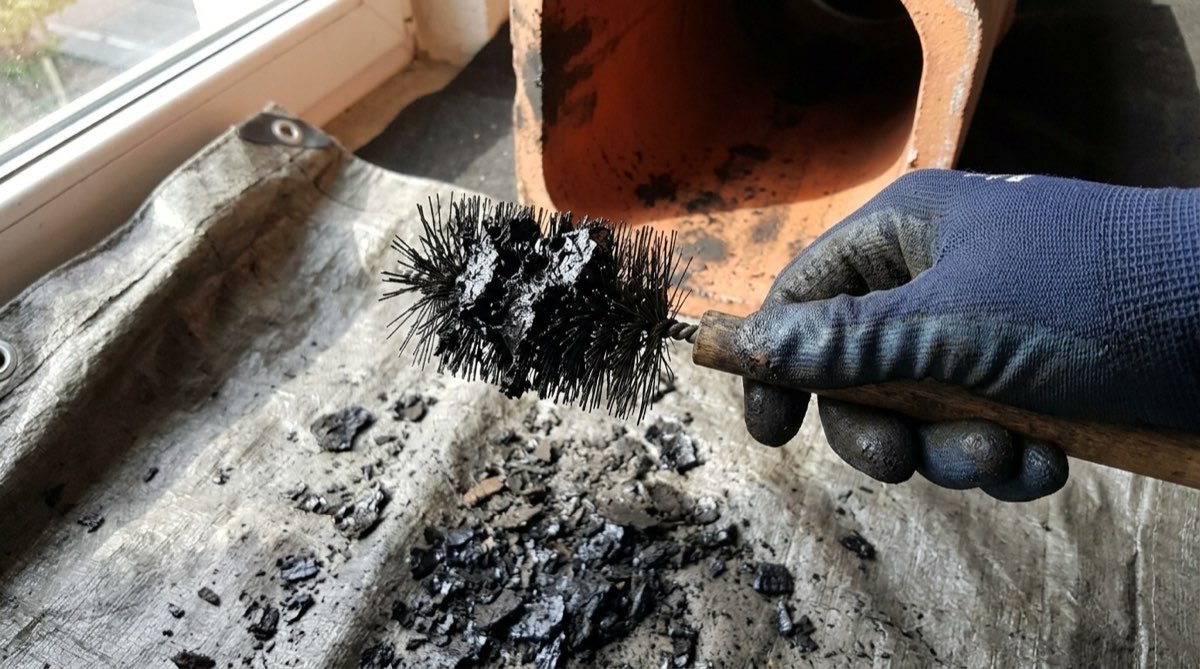
Creosote removal is the heavier version of a sweep, for flues where the buildup has gone past dust into flaky honeycomb or hardened glaze. Glaze will not brush out — it takes rotary chains, whips, or a chemical treatment applied over several burns before it releases from the tile.
Reasons to schedule this service
This service may be the right fit when one of these situations sounds familiar:
- black shiny buildup is visible
- the chimney has unknown service history
- smoke or odor suggests heavy buildup
What matters for Tulsa properties
Most heavy creosote we hear about in Tulsa traces back to two things: wood that did not get a full summer to season, and stoves run choked-down overnight. The removal visit should end with a straight conversation about which one built the glaze, or the same buildup will be back within a season or two.
What affects the estimate
- creosote stage
- fuel moisture
- burn pattern
- flue size
- inspection findings
How the work usually goes
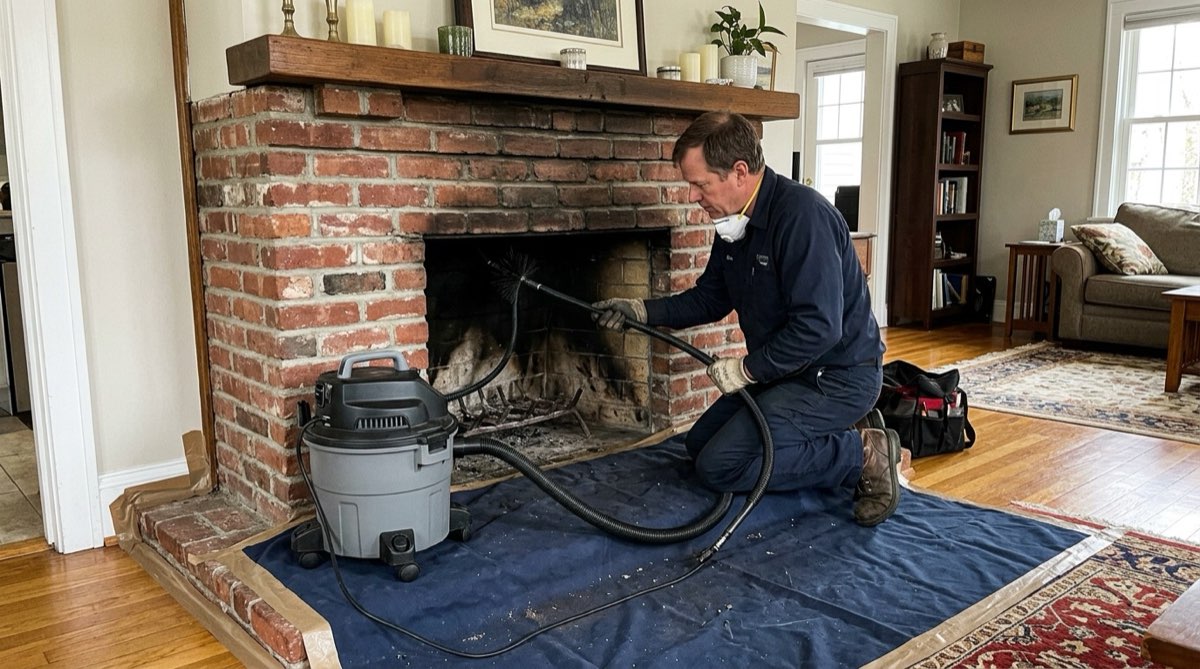
Heavy buildup comes out in stages:
- Appliance And Access Review: Review the fireplace, stove, dryer vent, last service date, smoke, odor, water, or creosote concern.
- Flue And Exterior Inspection: Check the flue, firebox, cap, crown, flashing, roof access, and exterior chimney conditions.
- Cleaning Or Repair Plan: Decide whether the visit is cleaning, inspection, draft troubleshooting, vent cleaning, or repair planning.
- Sweep Repair Or Vent Work: Complete the sweep, fireplace cleaning, stove work, cap, flashing, or dryer vent service that fits the issue.
- Draft Leak And Safety Review: Review draft, cleanup, visible concerns, safer-use notes, and what to watch before the next burn.