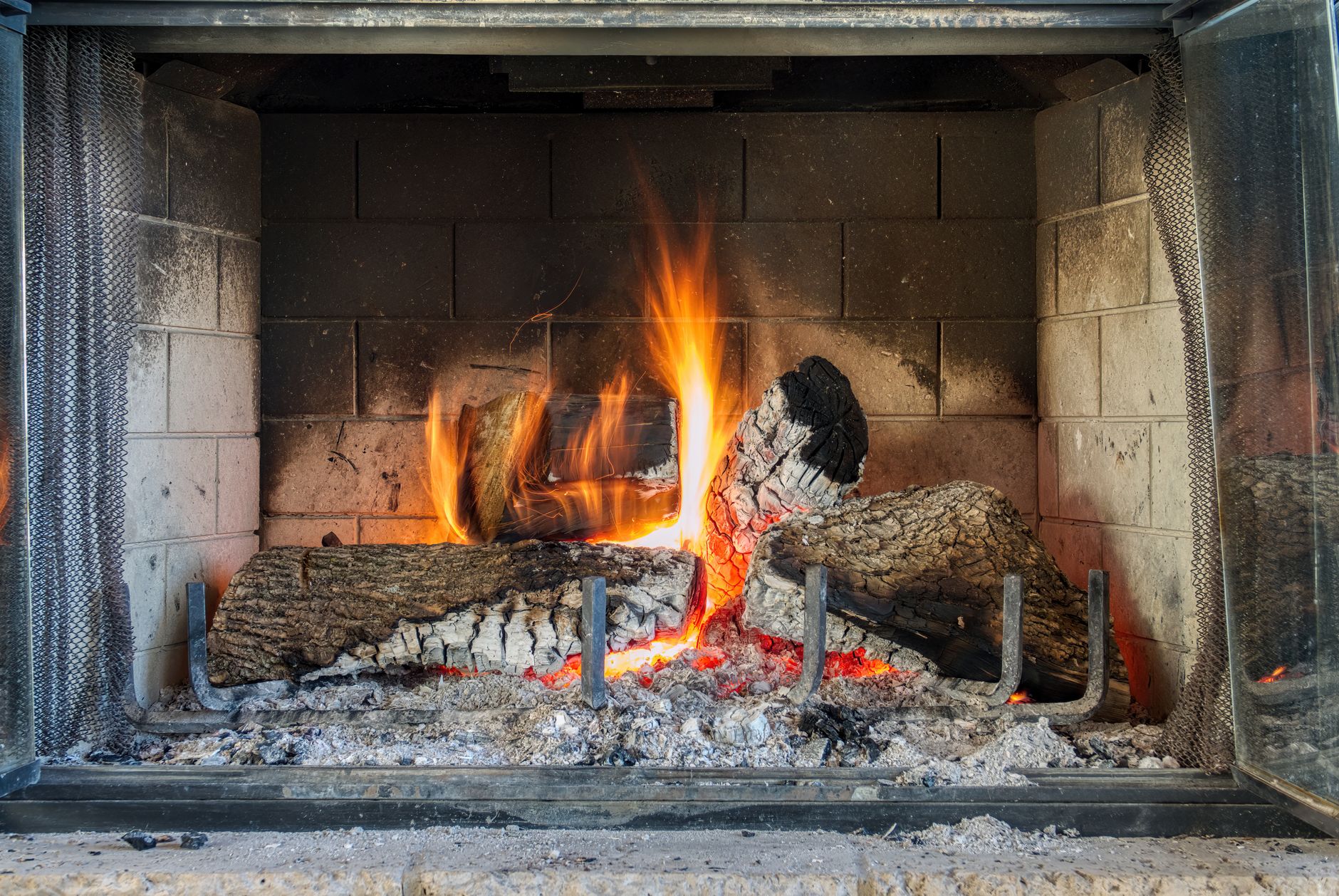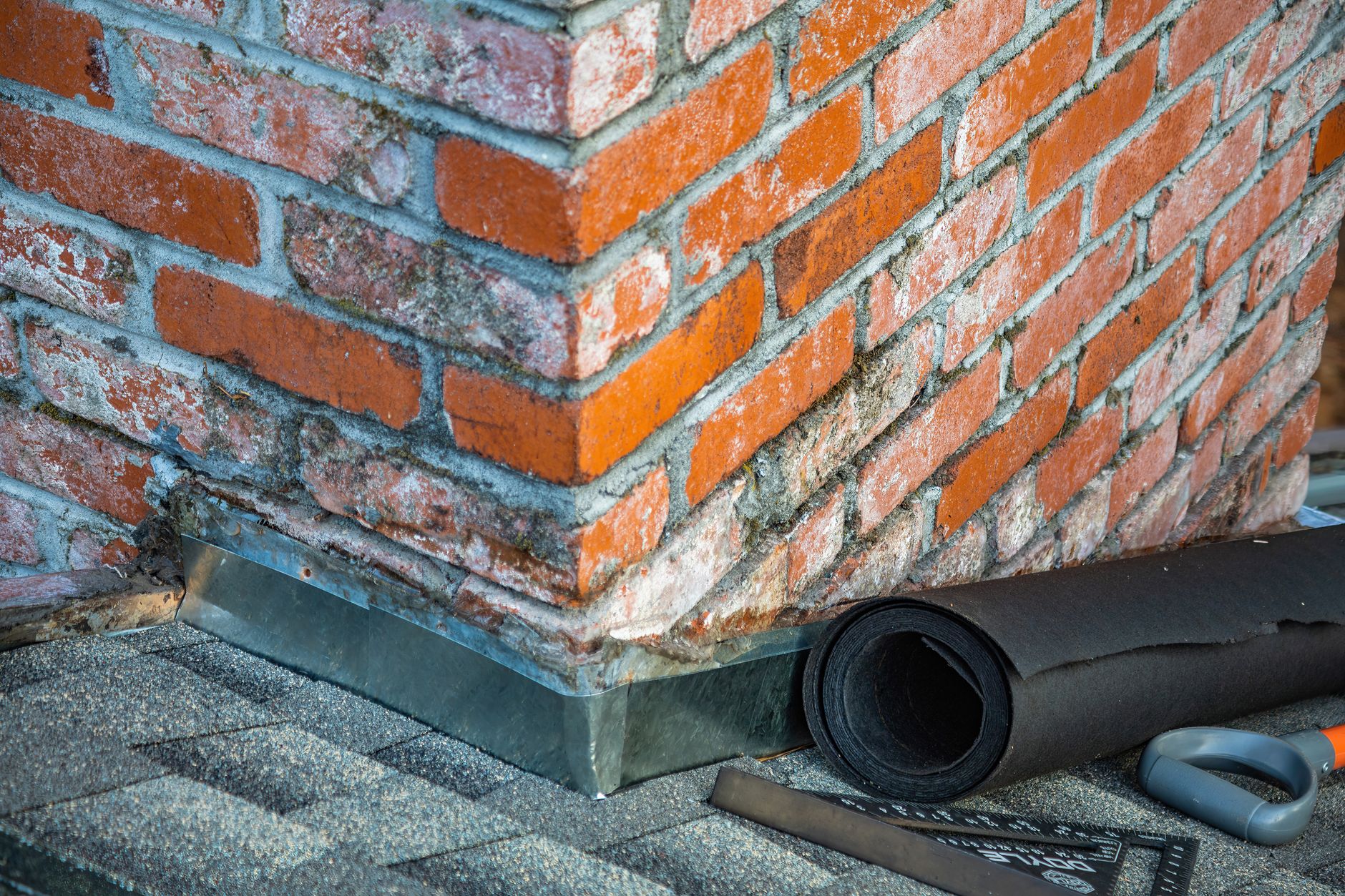
A fireplace pushes smoke into the room when the flue is not pulling hard enough to lift it. Sometimes that is a cold-start problem that fixes itself in ten minutes; sometimes it is a blocked or undersized flue. Here is how to tell which one you have.
Cold flue and pressure
A flue full of cold air pushes down while your fire tries to push up. Exterior chimneys — the common setup on Tulsa brick ranches — run coldest. The fix is priming: burn a torch of rolled newspaper held up near the damper for a minute until you feel the air reverse, then light the fire.
The house itself can outcompete the chimney. A tight house with the furnace, bathroom fans, kitchen hood, or dryer running is pulling air out, and the chimney becomes the return path. Cracking a window an inch near the fireplace often stops the smoke immediately — that is your diagnosis, not your permanent fix.
Blockage or damper issues
If priming and a cracked window do not help, something is in the way. The usual suspects: a damper that is not fully open or has rusted partly shut, a bird nest on the smoke shelf, or creosote thick enough to choke the flue.
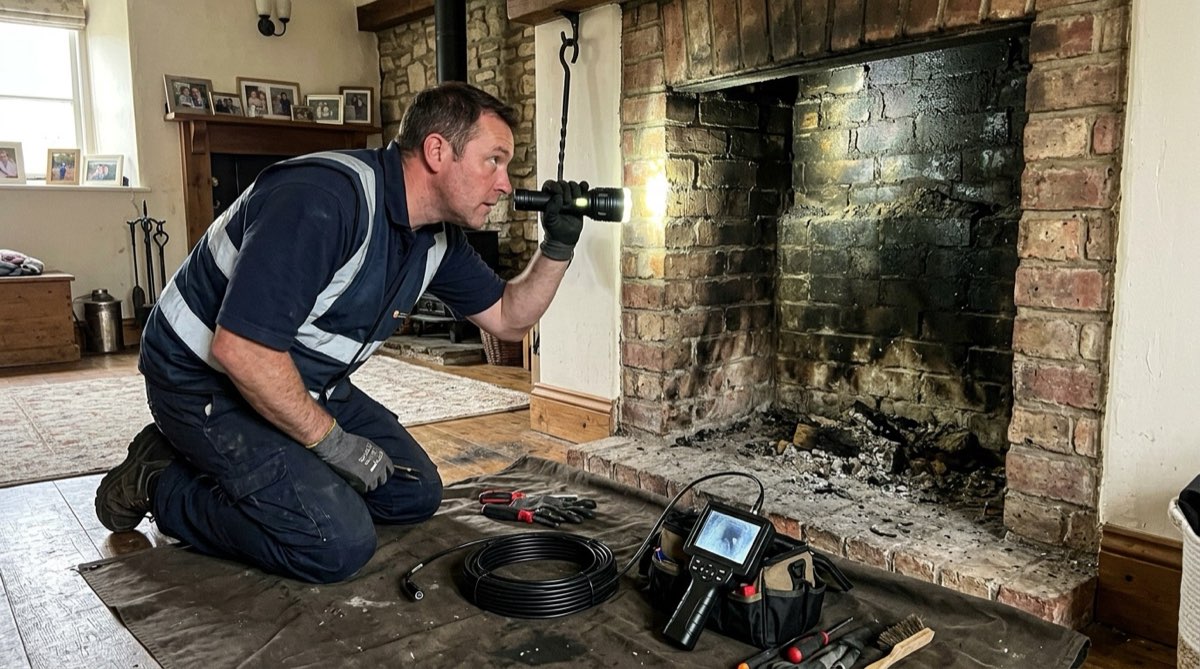
With a flashlight and the fireplace cold you can check the damper yourself. Anything past the damper — nests, buildup, a collapsed liner tile — is camera-and-brush territory.
When to stop using the fireplace
Stop burning and get an inspection if smoke comes back every burn, if you smell smoke upstairs or in other rooms, or if you see flaky or glazed buildup when you look up past the damper.
Smoke in the room means combustion gases in the room, and that includes carbon monoxide. A CO alarm on the same floor as the fireplace is cheap insurance regardless of how well the chimney drafts.
Fixes that hold up long term
If priming the flue fixes it every time, the chimney is fine and cold starts are just part of owning an exterior-wall fireplace. Keeping kindling dry and starting fires top-down — big wood on the bottom, kindling on top — makes those starts cleaner.
If the window trick is what fixes it, the house needs makeup air. Options run from cracking a window during fires to a dedicated outside-air kit for the firebox; a sweep can tell you which fits your setup.
If neither works, the flue itself is the problem — blocked, undersized for the opening, or too short. That is a diagnosis visit, and it is worth doing before another season of smoky evenings.