A fireplace that smells fine all winter and reeks in July is one of the most common chimney calls in Oklahoma. The smell is creosote and soot reacting to summer humidity, pushed into the room by air pressure. Neither part is mysterious, and both can be fixed.
Humidity and old soot
Creosote is basically tar, and tar smells strongest when it is warm and damp. Tulsa summers are both. Humid air moving down the flue wets the soot and carries the smell into the house.
An uncapped flue makes it worse — every summer thunderstorm drops rain straight onto the smoke shelf, where it soaks into the buildup and sits.
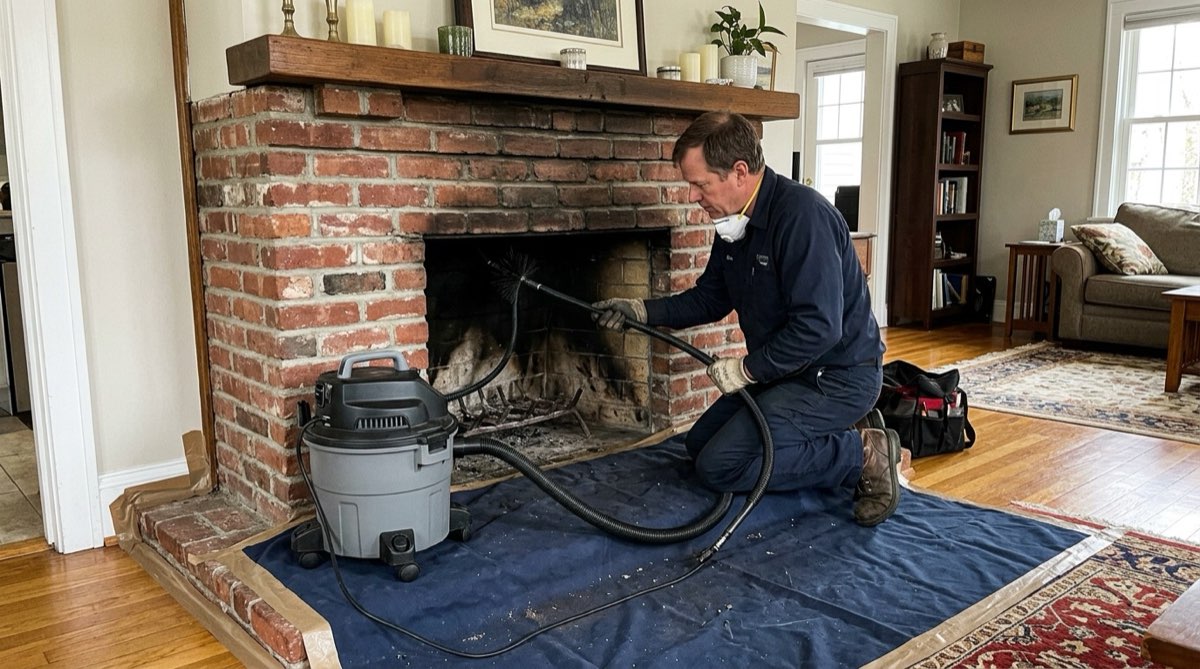
If the smell is sharp and tarry, the honest fix is removing the source: a proper sweep of the flue and smoke shelf, not a deodorizer sprayed into the firebox.
Negative pressure
In summer the air conditioning runs, the house is sealed tight, and exhaust fans in bathrooms, the kitchen, and the dryer all pull air out. That air has to come back in somewhere, and an open flue is the easiest path — so the house inhales through the chimney, odor and all.
A standard throat damper leaks even when closed. A top-sealing damper, which caps the flue with a gasket at the top and opens on a cable, blocks both the airflow and the rain. For a smelly summer chimney it is usually the single most effective upgrade.
Caps leaks and animal debris
If the smell is more animal than tar, it may literally be animal. Open flues collect bird and raccoon nests, droppings, and sometimes a dead animal, and chimney swifts nest in uncapped Tulsa chimneys every spring.
A cap with a mesh screen ends the animal problem and keeps the rain out. Have the flue cleaned first so the nest material and whatever came with it actually leaves the chimney.
What actually fixes it, in order
Start with the cheap moves: keep the damper fully closed in summer, and run bath and kitchen fans a little less aggressively when you notice the smell. If the odor drops, you have confirmed the pressure story.
The durable fix is usually a combination: sweep out the creosote and any nest material, cap the flue if it is open, and add a top-sealing damper so humid air stops moving through the stack at all.
Deodorants and absorbers have a place after that — a tray of activated charcoal on the smoke shelf helps with residual odor — but they are the last step, not the first.