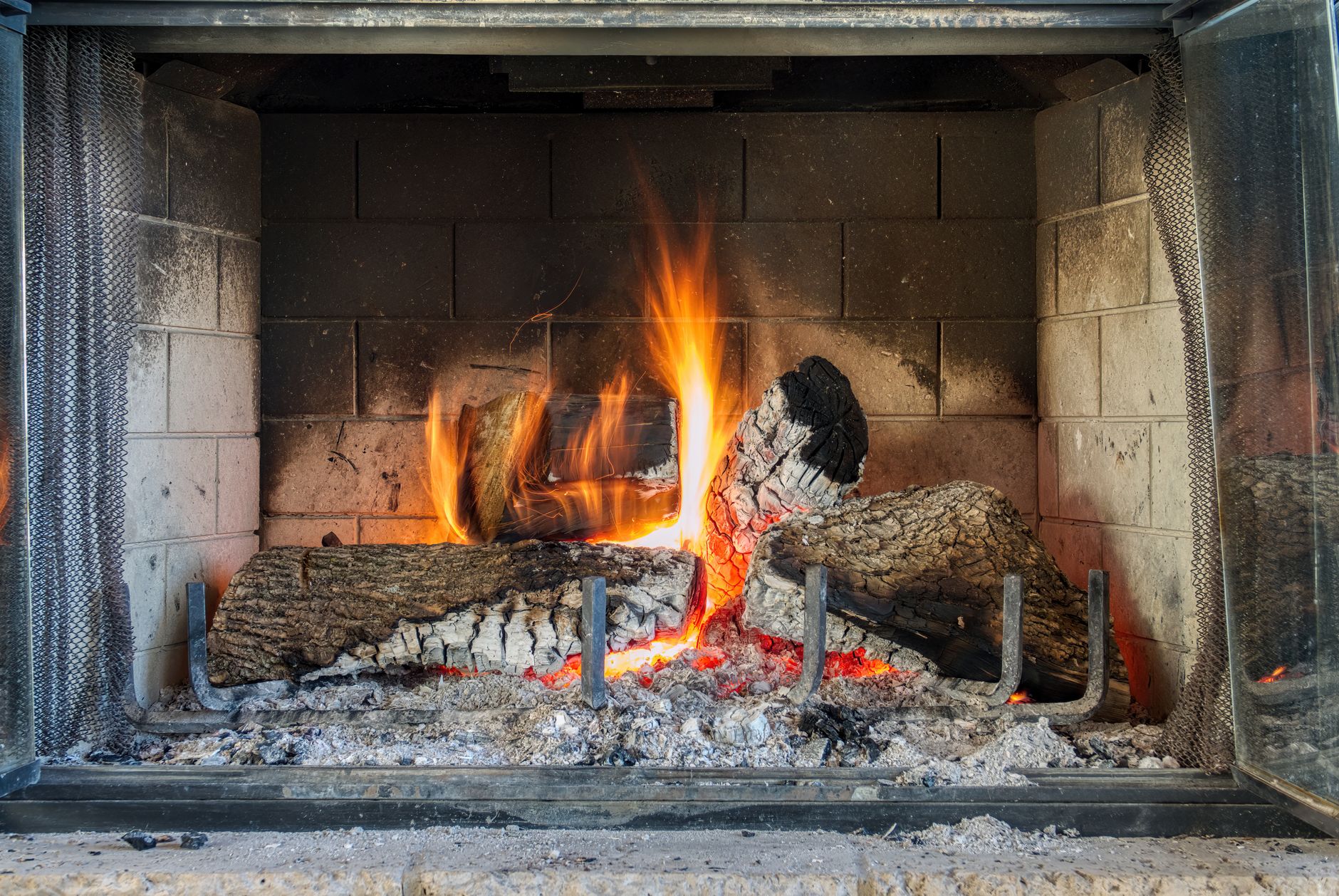
Chimney inspections follow three levels set by NFPA 211, the standard fire code for chimneys. Level 1 is a visual check of the accessible parts during a normal sweep. Level 2 adds a camera scan of the flue and is what you want after a chimney fire, before buying a home, or after changing appliances. Level 3 involves opening up construction and is rare.
Flue liner and smoke chamber
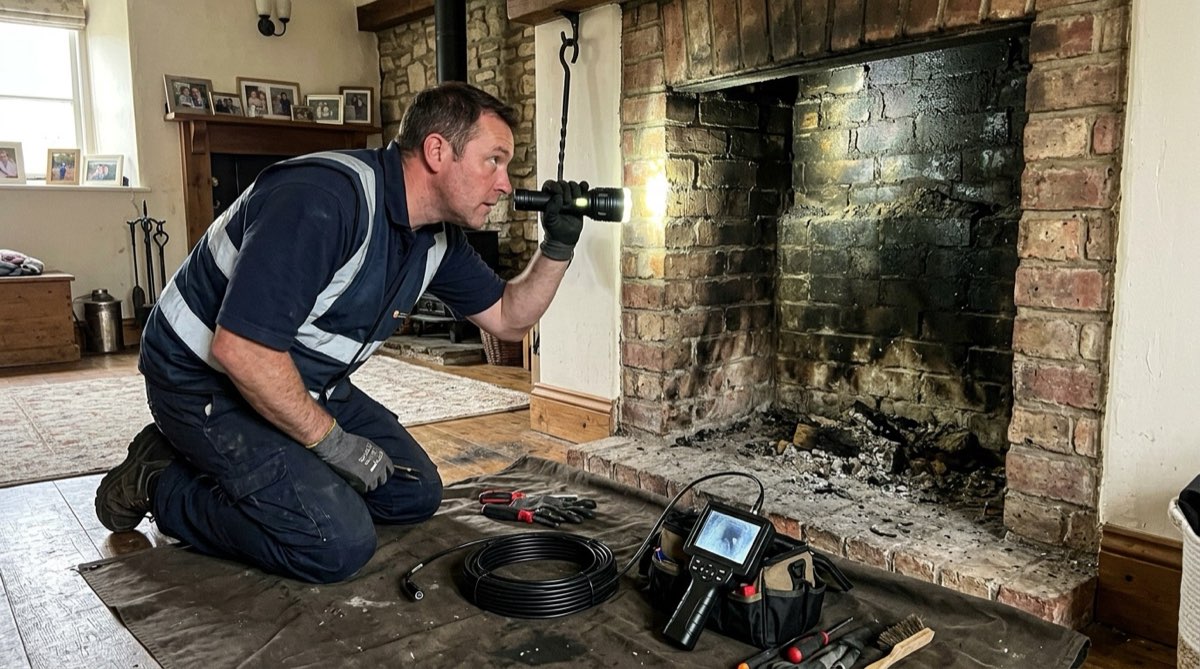
The camera goes up the flue looking for cracked or shifted clay tiles, missing mortar joints, and gaps where flue gases could reach framing. Any of those is a reason to fix before burning, not after.
The smoke chamber — the funnel above the firebox — matters more than most homeowners expect. If it is rough, stepped brick instead of a smooth parged surface, it collects creosote and slows the draft.
The inspector also grades the creosote itself. Dusty buildup means keep burning and clean on schedule; glazed buildup means the burning habits need to change too.
Cap crown flashing and masonry
Most chimney damage in Tulsa is water damage. Wind-driven rain from spring storms, then freeze-thaw in winter, works on every joint at the top of the chimney.
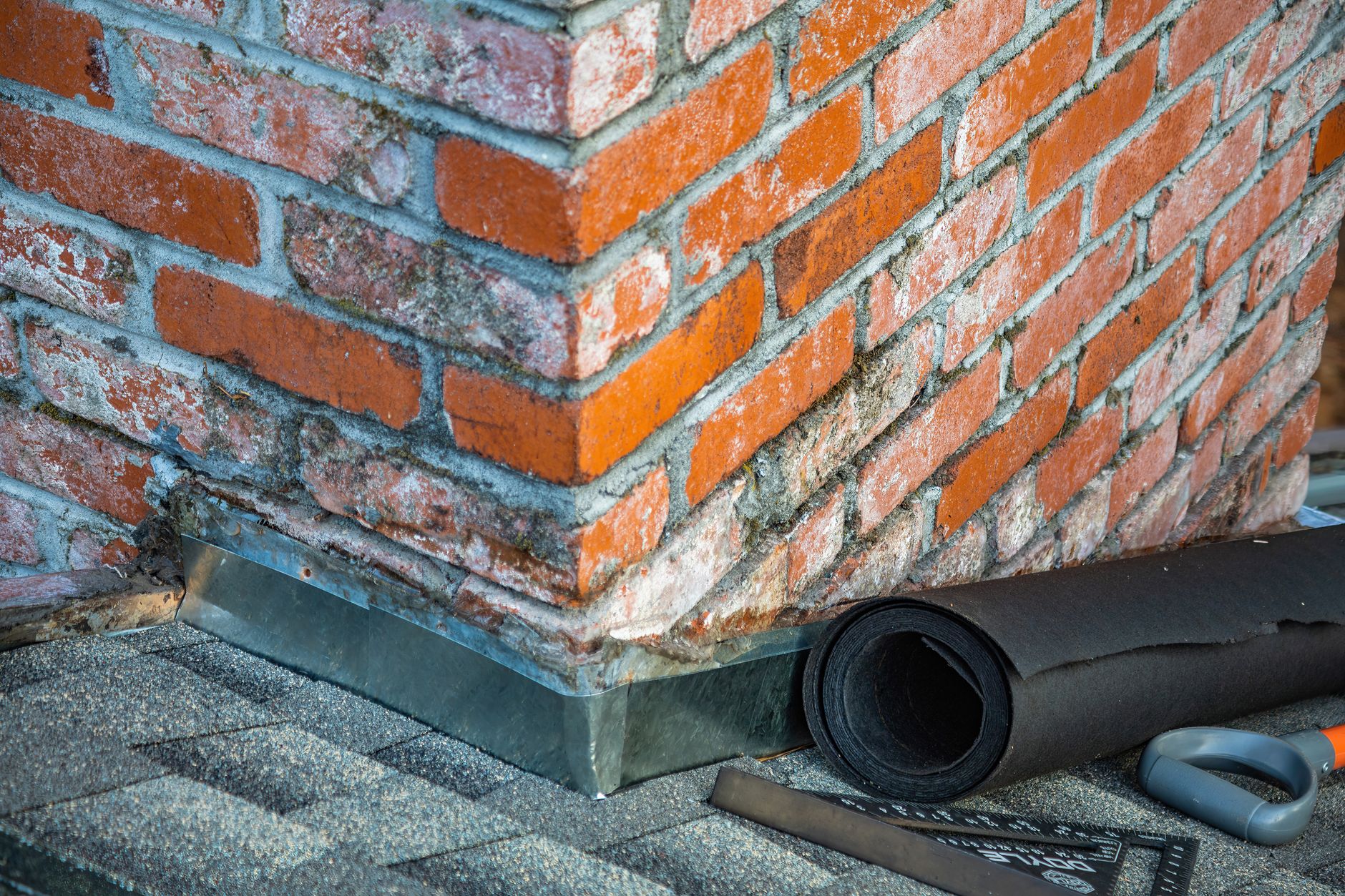
The inspection covers the cap (keeps rain and animals out of the flue), the crown (the concrete slab that sheds water off the top), the flashing where brick meets shingles, and the brick faces themselves for spalling — faces popping off from absorbed water freezing.
Home sale and winter-use timing
A Level 2 inspection is standard practice at a property transfer, and it is cheap information compared to inheriting someone else's cracked liner. Ask for the written report with photos, not a verbal all-clear.
For your own house, the smart window is late summer or early fall. October and November are the backlog months for every sweep in Tulsa County, and you want problems found while there is still time to fix them before burning season.
Questions worth asking before you book
Ask which inspection level you are getting and whether the camera is included — 'inspection' means different things at different companies, and the difference matters if you are relying on the result.
Ask what documentation you receive. For a home purchase or an insurance question you want a written report with photos, not a verbal summary from the driveway.
Finally, ask what happens if they find something. A trustworthy answer is an explanation and a separate written estimate you can think about — not a discount that expires when the truck leaves.