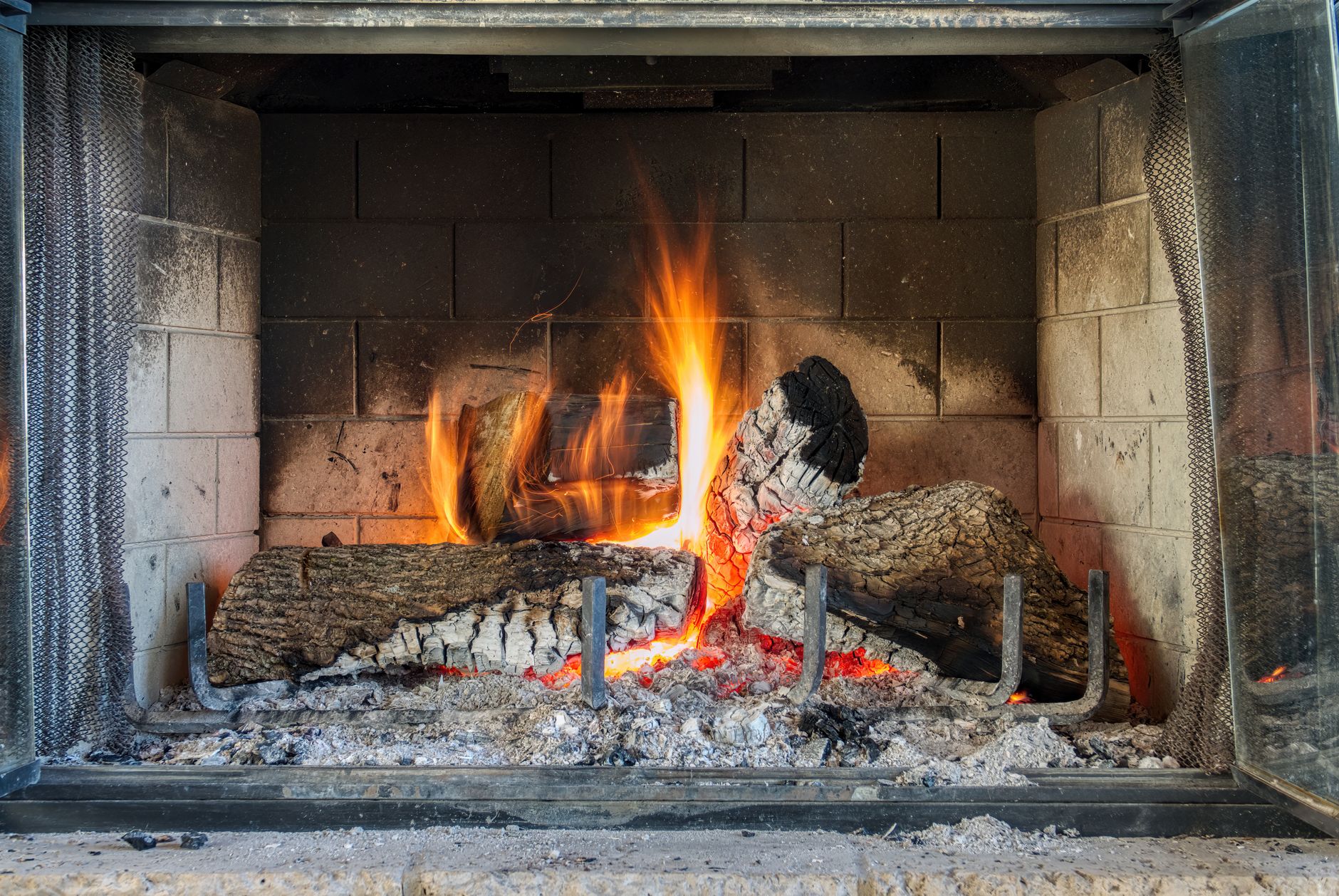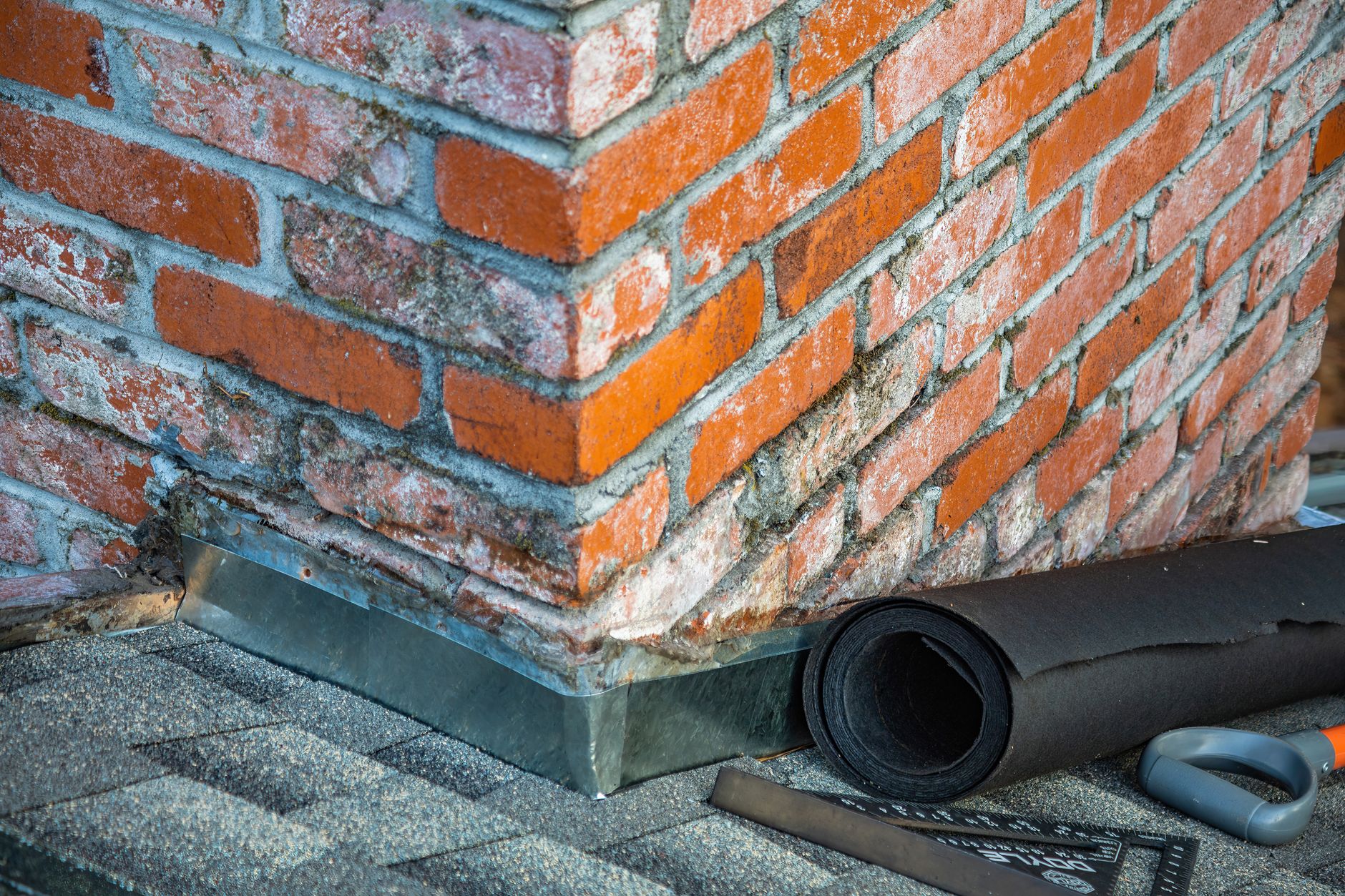
A chimney fire is creosote inside the flue catching fire. Some are loud and obvious; many are quiet, burn for a few minutes, crack the flue liner, and go completely unnoticed until an inspection finds the damage. That second kind is why sweeps take this seriously.
Creosote and burn habits
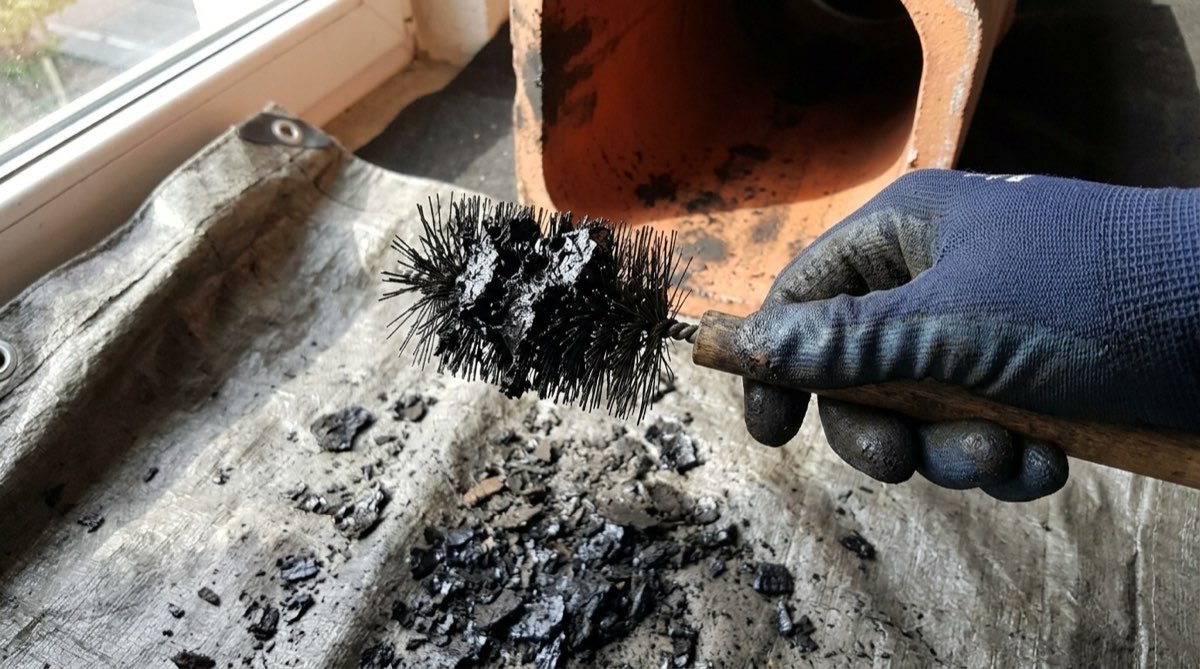
Creosote is condensed wood smoke. It builds fastest when wood burns cool and slow: damp wood, a smoldering overnight burn, or air controls choked down too far. A hot, active fire with dry wood sends most of that smoke up and out before it can stick.
Around Tulsa most firewood is oak, hickory, or pecan, and all of it needs a full summer to season. Wood cut in spring and burned that same November is usually still wet inside, and wet wood is the single biggest creosote producer.
There are three stages of creosote. Dusty soot brushes out easily. Flaky, honeycomb deposits take more work. Stage three is a shiny hardened glaze that ordinary brushing will not remove — and it is the most flammable of the three.
Warning sounds and smells
An active chimney fire can sound like a low roar or freight train, with popping or crackling from inside the wall, dense smoke or sparks at the cap, and a chimney exterior that is hot to the touch. If that is happening, get everyone out and call 911 before you call anyone else.
Past fires leave quieter evidence: puffy or ash-colored creosote, creosote flakes in the firebox or on the roof, and a strong tar smell after burns. Cracked flue tiles found during a camera inspection are the classic sign a fire already happened.
What to inspect after a concern
If you suspect a fire happened, stop using the fireplace until a sweep runs a camera up the flue — a Level 2 inspection. A cracked liner can let heat reach the wood framing around the chimney, which is how house fires start weeks after the chimney fire itself.
Insurance carriers usually want the inspection report and photos, so ask for both. In Tulsa the risky moment is the first hard burn when a November cold front rolls in, after the flue has sat through a humid summer — booking the inspection in fall beats discovering a problem in January.
Habits that keep the flue clean
Burn dry wood, and burn it hot. Split wood dries in six months to a year in Oklahoma sun if it is stacked off the ground with the top covered; a $15 moisture meter reading under 20 percent takes the guesswork out.
Skip the slow overnight smolder. If the house gets too warm with a proper fire, the answer is a smaller hot fire, not a big choked one. And never burn wrapping paper, cardboard, or construction scraps — they flare hard, loft burning embers up the flue, and can light existing creosote.
None of this replaces the annual inspection. It just means the inspection keeps finding dust instead of glaze, and cleanings stay quick and cheap.